Toolkit 02
First class, by which route?
Explore six premium-cabin routings, when to search for seats and which points transfers to compare.
Digital guides are delivered instantly, so sales are final. See the refund policy.
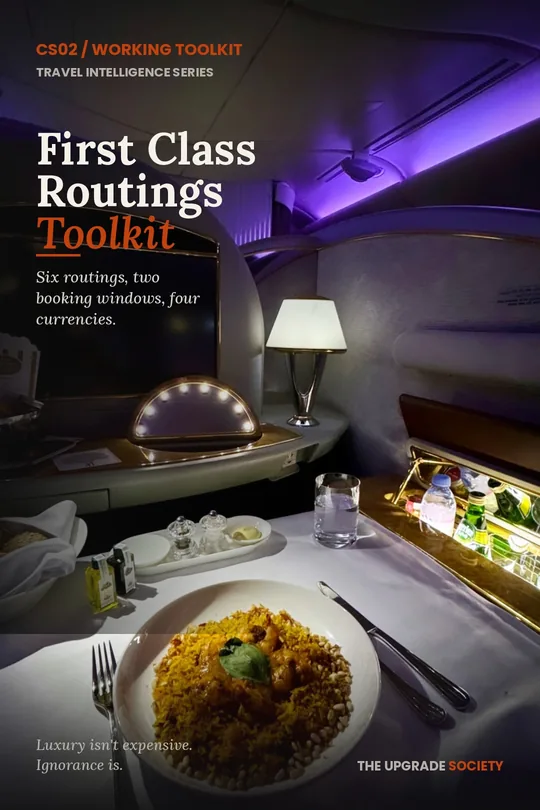
A look inside.
The best routing is not always the obvious routing. Availability, transfer partners, and the actual travel date shape the possible path.
Inside this toolkit
- Six high-yield premium-cabin routings
- Booking windows and transfer-currency choices
- Award-space searches and phone-desk preparation
Best for someone with dates, an origin and a points balance. Read the broader First Class field note first if you are still choosing between cash and awards.
Related Society record · Member case study · Flexible dates
Yaz’s Gulfstream flight.
A Gulfstream IV-SP was repositioning from Van Nuys to Fort Lauderdale. Yaz could travel on the operator’s dates. The desk secured the empty leg for $2,795.

The film shows Yaz with her Maybach. Her written account covers the Gulfstream flight.
- Aircraft
- Gulfstream IV-SP
- Empty-leg fare
- $2,795
- Separate full-charter quote, before taxes
- $148,500
What the toolkit covers.
The toolkit lets you map your airports and travel window before comparing the premium-cabin options for that itinerary.
Reader reviews.
34 published reviews for First Class Routings Toolkit.
The schedule-open and last-call windows changed how I search. I had been checking random dates and assuming nothing was available. I bookmarked it before I even finished reading.
I came in with a basic understanding and still learned quite a bit. The warning about Lufthansa fuel surcharges through Miles & More was worth the read by itself.
What worked for me was how specific the guide got. I finally understand why the same seat can cost wildly different amounts depending on which program books it. Useful for both beginners and people who already collect points.
Read more reviews (31)Show the first three reviews
Reviews 4–12
The ANA round-trip rule was the missing detail behind several searches that kept failing. Honestly, this made award travel feel like a process instead of luck.
This answered the exact question that had me stuck. It cleared up several mistakes I had been repeating. The US to South America routing surprised me. It is not flashy, but the availability and pricing make sense.
The tool directory helped me understand when to use seats.aero and when I actually need ExpertFlyer. I wish I had this before my last points transfer.
The guide got straight to the parts that affect the decision. The T-21, T-14, and T-7 check sequence gave me something specific to follow instead of refreshing all day.
I opened this expecting a quick checklist and ended up reading the whole thing. The fare-class explanation made phone calls with airline agents much less intimidating. Specific enough to use while searching in real time.
The Qsuite section clearly explained why AAdvantage can be cleaner than booking through a program with heavy surcharges. Honestly, the routing examples made the strategy click quickly.
This was more useful than I expected. The practical warnings are what set it apart. The transcontinental section reminded me that a great premium redemption does not have to be international.
The intra-Asia add-on strategy helped me improve a trip without rebuilding the whole itinerary. I bookmarked it before I even finished reading.
I came in with a basic understanding and still learned quite a bit. I liked the reminder to verify cached award space before transferring points. That can prevent a painful mistake.
Reviews 13–21
What worked for me was how specific the guide got. The six-route framework made a complicated topic feel manageable in one sitting. Useful for both beginners and people who already collect points.
The no-YQ program list is the kind of reference I will keep open while booking. Honestly, this made award travel feel like a process instead of luck.
This answered the exact question that had me stuck. It cleared up several mistakes I had been repeating. The section on supervisor escalation gave me better language when an agent could not see space I had already verified.
The schedule-open and last-call windows changed how I search. I had been checking random dates and assuming nothing was available. I wish I had this before my last points transfer.
The guide got straight to the parts that affect the decision. The warning about Lufthansa fuel surcharges through Miles & More was worth the read by itself.
I opened this expecting a quick checklist and ended up reading the whole thing. I finally understand why the same seat can cost wildly different amounts depending on which program books it. Specific enough to use while searching in real time.
The ANA round-trip rule was the missing detail behind several searches that kept failing. Honestly, the routing examples made the strategy click quickly.
This was more useful than I expected. The practical warnings are what set it apart. The US to South America routing surprised me. It is not flashy, but the availability and pricing make sense.
The tool directory helped me understand when to use seats.aero and when I actually need ExpertFlyer. I bookmarked it before I even finished reading.
Reviews 22–30
I came in with a basic understanding and still learned quite a bit. The T-21, T-14, and T-7 check sequence gave me something specific to follow instead of refreshing all day.
What worked for me was how specific the guide got. The fare-class explanation made phone calls with airline agents much less intimidating. Useful for both beginners and people who already collect points.
The Qsuite section clearly explained why AAdvantage can be cleaner than booking through a program with heavy surcharges. Honestly, this made award travel feel like a process instead of luck.
This answered the exact question that had me stuck. It cleared up several mistakes I had been repeating. The transcontinental section reminded me that a great premium redemption does not have to be international.
The intra-Asia add-on strategy helped me improve a trip without rebuilding the whole itinerary. I wish I had this before my last points transfer.
The guide got straight to the parts that affect the decision. I liked the reminder to verify cached award space before transferring points. That can prevent a painful mistake.
I opened this expecting a quick checklist and ended up reading the whole thing. The six-route framework made a complicated topic feel manageable in one sitting. Specific enough to use while searching in real time.
The no-YQ program list is the kind of reference I will keep open while booking. Honestly, the routing examples made the strategy click quickly.
This was more useful than I expected. The practical warnings are what set it apart. The section on supervisor escalation gave me better language when an agent could not see space I had already verified.
Reviews 31–34
This answered the exact question that had me stuck. It cleared up several mistakes I had been repeating. The US to South America routing surprised me. It is not flashy, but the availability and pricing make sense.
I opened this expecting a quick checklist and ended up reading the whole thing. The fare-class explanation made phone calls with airline agents much less intimidating. Specific enough to use while searching in real time.
The no-YQ program list is the kind of reference I will keep open while booking. Honestly, this made award travel feel like a process instead of luck.
The guide got straight to the parts that affect the decision. The warning about Lufthansa fuel surcharges through Miles & More was worth the read by itself.
First Class Routings Toolkit
One-time digital purchase. Available without membership.